
I am a Computer Vision engineer with a PhD from EPFL in Computational Imaging. My interests are in 3D reconstruction, segmentation, inverse rendering, inverse problems and numerical optimization. Below is a selection of some of my recent work.
I built a semantic segmentation system for surface defect detection on ultra high-resolution digital twins (up to 30 gigapixels at 2000 ppi) with multimodal data - reflectance, surface normals and depth alongside multispectral data. We worked with external experts to develop a small annotated dataset. Due to severe data imbalance, we leveraged distribution aware resampling, heavy augmentations and elements of semi-supervised learning to developed multiple semantic segmentation models. To achieve consistent predictions at gigapixel scales without compromising precision or recall, we employ severe test-time augmentations and ensemble the models via probability weighting.
An aspect of real world objects that is often ignored in digital reconstructions is reflectance capture. The visual richness of material textures in real world arises from the way light interacts with the surface roughness of the object, resulting in cues we perceive such as matte, glossy, shiny. To effectively estimate this reflectance, I built a differentiable renderer for inverse rendering, partially inspired by the idea behind NeRF. The resulting reflectance model brought drastic realism improvements with an increase of up to 15dB of PSNR in objects with regions of specular highlights.
Artmyn’s multimodal imaging pipeline operates at 2000ppi, producing gigapixel assets. This comes with several challenges. Consistent image registration is a big challenge, particularly across regions with repeating patterns, which can occur surprisingly often in paintings. To overcome this, I built CRAFT, an inhouse adaptation of the RAFT optical flow architecture, where we added a real geometry encoder based on estimated depth and transfer learnt on synthetic data, resulting in a reduction of failure rates from 20% to under 1%. Accurate depth estimation at these scales is also non-trivial. I cast the problem as a large scale inverse problem with priors from both photometric cues and stereo displacement to improve depth estimation drastically. I also contributed heavily to proper camera sensor and color calibration models resulting in extremely high fidelity digital twins.
This was a research project for the course CS231N - Deep Learning for Computer Vision at Stanford Online. In this project the problem of Phototourism - i.e recreating a 3D model of the real world from unstructured set of photographs is considered from a deep learning perspective. The work explores the use of deep learning components in the classical structure from motion pipeline. It also explores the replacement of the optimization component bundle adjustment using the recently proposed DBARF, a generalized NERF inspired neural rendering method that simultaneously optimizes camera pose and image rendering.

This was a research project for the course CS224N - Natural Language Processing at Stanford Online. In this study, I was interested in Tamil language models that can tell stories with the same complexity as told to toddlers and young children. To build such a model I created a machine translated version of the TinyStories dataset with 1M stories in the train split. I then explored GPTNeo and Llama models of differing sizes, all less than 150M parameters to learn story telling. Training was done in three stages, with internet quality corpus, machine translated data and finaly expert curated data. While the models are able to tell stories, they are not of high quality, mainly arising from the low-quality of machine translations. Some of the resulting models are small enough at less than 100MB and can easily run on your browser. Head over to the project site to give it a try.
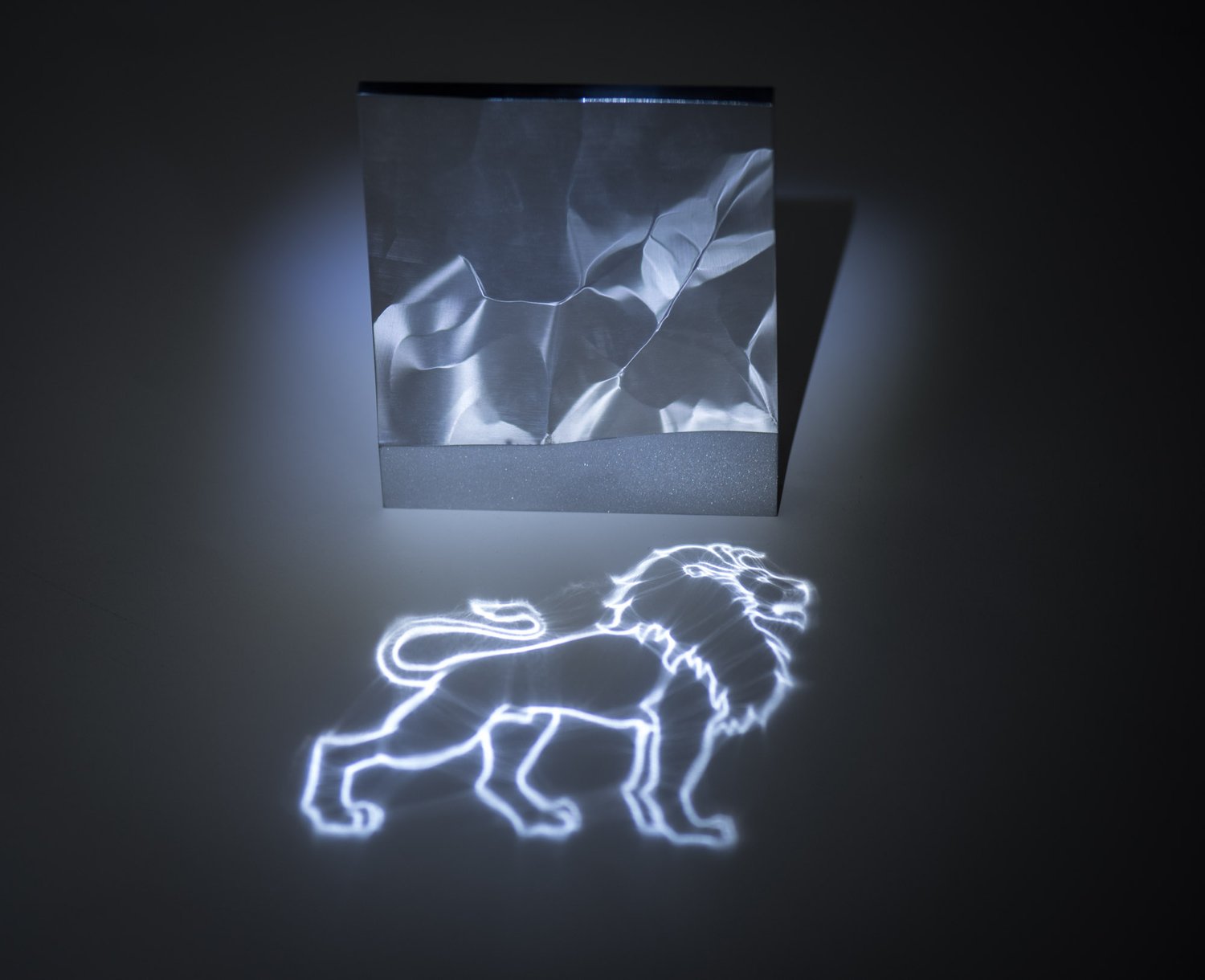
At Rayform, I contributed heavily to the algorithm in production for the design of freeform optics. My particular focus was on the computational method behind the lens’ surface design, resulting in a parameter-free algorithm that was robust to more general light configurations. This has since been licensed to LVMH’s Fred brand. I also implemented constrained optimization methods to account for manufacturability constraints like smoothness and thickness.

During my PhD at EPFL, I worked on a Google funded project called “eFacsimile” that was focused on modern computational methods for high fidelity digitization of cultural heritage artifacts. The work resulted in collaborations and exhibitions at Vitromusée and IP that was later licensed to Artmyn through Invaluable. A selection of resulting publications and media coverage is linked below.

I used to be obsessed with mountains and the night sky. Most of my photos still reside on a hard drive somewhere, but I have a few on my 500px.